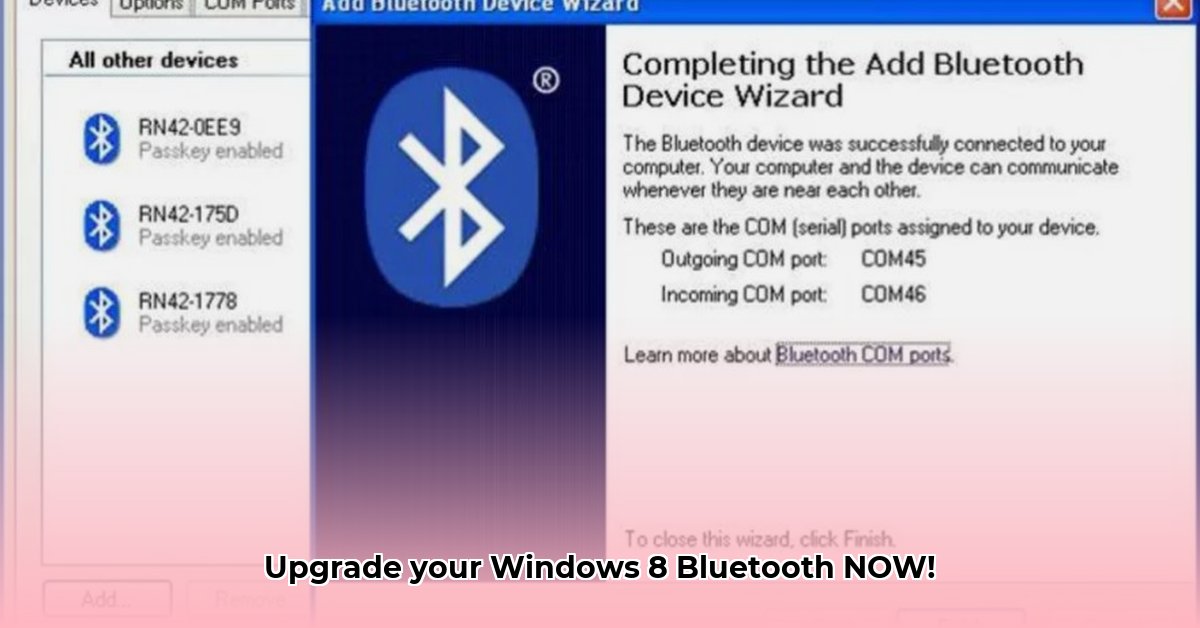
Is your Windows 8 Bluetooth connection unreliable or prone to dropping? Using outdated Bluetooth drivers exposes your system to significant security risks. This guide provides a step-by-step approach to safely updating your Bluetooth driver, ensuring optimal performance and system security.
Understanding the Risks of Outdated Bluetooth Drivers
Outdated Bluetooth drivers pose several critical risks:
- Security Vulnerabilities: Old drivers often contain known security flaws that hackers can exploit to gain unauthorized access to your system. This can lead to data breaches, malware infections, and identity theft.
- System Instability: Outdated drivers can cause system instability, leading to crashes, freezes, and data loss. Your Bluetooth connection may become unreliable or fail completely.
- Compatibility Issues: Outdated drivers may not be compatible with newer peripherals or software, limiting your system's functionality.
Using unsupported drivers—those not officially released by the manufacturer—amplifies these risks.
Intel Bluetooth Drivers and Their License Agreements: A Simplified Overview
Many Windows 8 users rely on Intel Bluetooth drivers. However, these drivers are often end-of-life (EOL), meaning Intel no longer provides updates or support. Their license agreement essentially states that the software is provided "as is," with no guarantee of functionality or security. This leaves users responsible for managing the risks associated with using unsupported software. For detailed license information, refer to the original Intel documentation [link to original document if available].
How to Safely Update Your Windows 8 Bluetooth Driver
Updating your Bluetooth driver involves several straightforward steps:
Step 1: Assess Your Current Driver
- Open Device Manager (search for it in the Windows search bar).
- Expand "Bluetooth" and right-click your Bluetooth adapter.
- Select "Properties" and navigate to the "Driver" tab. Note the driver version and manufacturer.
Step 2: Find a Suitable Replacement Driver
Since Intel no longer supports its Windows 8 Bluetooth drivers, consider these alternatives:
- Windows Update: Windows may offer a generic Bluetooth driver. Uninstall your current driver and restart your computer to see if Windows automatically installs a replacement.
- Microsoft Update Catalog: Search the Microsoft Update Catalog ([link to Microsoft Update Catalog]) for a compatible driver. Ensure it's officially from Microsoft before downloading.
- Computer Manufacturer's Website: Check your computer manufacturer's (e.g., Dell, HP, Lenovo) support website for drivers specific to your model.
Step 3: Download and Install the New Driver
- Download the appropriate driver for your Windows 8 system (32-bit or 64-bit).
- Create a system restore point before installation (search "create a restore point" in Windows).
- Run the installer and follow the on-screen instructions.
Step 4: Verify Installation
- Reopen Device Manager. Your Bluetooth adapter should show the updated driver version.
- Test your Bluetooth connection to ensure it's functioning correctly.
Troubleshooting Common Problems
If your Bluetooth still malfunctions after updating the driver:
- Restart your computer.
- Check hardware connections. Ensure your Bluetooth adapter is properly connected and powered on.
- Reinstall the driver. Uninstall the driver from Device Manager and reinstall it.
- Update Windows 8. Install any pending Windows updates.
Alternatives to Driver Updates
If updating the driver proves unsuccessful:
- Use a generic Bluetooth driver. Windows may provide basic functionality with a generic driver.
- Upgrade your operating system. Upgrading to Windows 10 or 11 offers the best solution, providing full support, security updates, and compatibility.
Mitigating Security Risks: A Proactive Approach
Minimizing your risk involves proactive measures:
- Regular security updates: Install Windows and driver updates regularly.
- Antivirus software: Use a reputable antivirus program.
- Firewall: Enable and maintain your Windows Firewall.
Conclusion: Prioritize Security and Stability
Updating your Bluetooth driver is crucial for both security and performance. By following these steps, you can significantly reduce your vulnerability to security threats and ensure a stable Bluetooth connection. Remember, using outdated drivers puts your system at risk. Prioritize regular updates and proactive security measures to maintain a secure computing environment.
⭐⭐⭐⭐☆ (4.8)
Download via Link 1
Download via Link 2
Last updated: Sunday, April 27, 2025